
Link acquisition is the part of SEO that sounds like a corporate takeover and mostly involves emailing strangers to ask for a favour.
The plain version: link acquisition is the work of getting other websites to link to yours. Google still treats a link as a vote of confidence, so more good links usually means more authority and better rankings. That logic has held since flip phones were aspirational. What changed is which links count, and how much grief the wrong ones now cause.
So this is a guide to earning the links that help, avoiding the ones that hurt, and not paying anyone for the privilege. Let's get into it.
What link acquisition actually means
Link building and link acquisition get used interchangeably, and that's fine. If there's a shade of difference, it's tone. Link building covers any tactic that ends in a link, including the desperate ones. Link acquisition implies you're being deliberate: targeting relevant, credible sites and earning the link rather than manufacturing it.
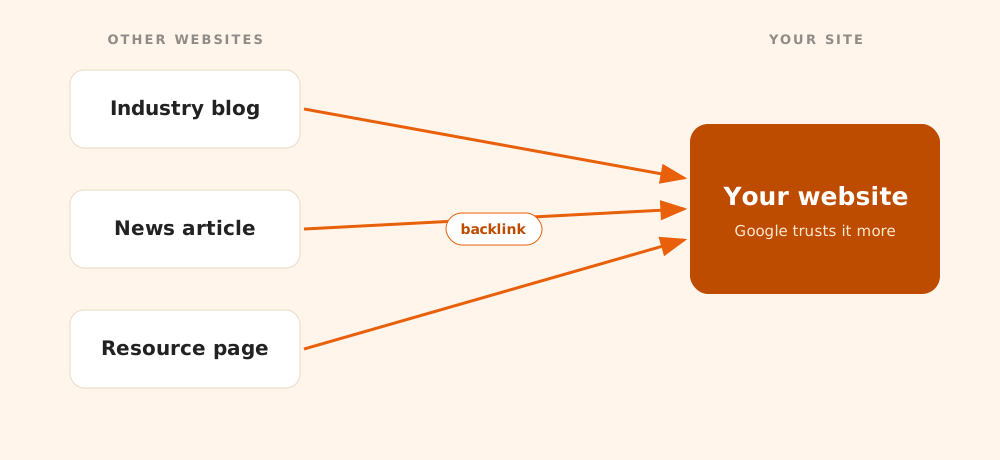
A link from another site to yours is a backlink. Search engines read it as one site vouching for another. The more often credible sites vouch for you, the more Google trusts that your pages deserve to rank. That's the whole mechanism, minus two decades of people trying to game it.
The goal was never to collect links like a stamp album. It's to collect the right ones from sites that have a reason to point at you. A hundred links from places nobody visits matter less than one from a site your customers actually read.
Why links still decide who ranks
Every couple of years someone declares that links are dead. They are reliably wrong. Backlinko's study of the top Google results found the page sitting in position one has, on average, 3.8 times more backlinks than the pages in positions two through ten. Correlation rather than gospel, but it is a stubborn correlation.
Most SEO agencies haven't moved the bar since 2019. The fundamentals still work: strong content, credible links, a clean technical base. What's changed is how Google surfaces answers, not whether it trusts links. Anyone telling you backlinks stopped mattering is usually selling something that conveniently skips the hard part.
We once took on a business that had paid an agency £1,200 a month for 14 months. The monthly report was a PDF with the phrase "ongoing optimisation" in it four times. In over a year, that agency had built precisely zero backlinks. Eleven keywords had crept from position 18 to position 15, which is the SEO equivalent of moving from the back of the queue to slightly less of the back. The links were never the problem. Nobody had done any. (We wrote more about that genre of agency in spotting the report factory.)
What separates a good link from a liability
Not every link is worth chasing. A link from a respected industry site is a genuine endorsement. A link from a directory nobody has visited since 2011 is closer to dead weight. The difference comes down to a handful of signals:
- Authority. A link from a site Google already trusts carries more weight than one from a site it's never heard of.
- Relevance. A link from a site in your field beats a random link from an unrelated one. A plumbing blog linking to a law firm looks like exactly what it is.
- Placement. A link inside the main body of a page, surrounded by relevant text, counts for more than one buried in a footer with forty others.
- Anchor text. The clickable words should describe what they point to. Natural and varied beats the same exact-match phrase forced in every time, which reads as manipulation because it is.
- Dofollow vs nofollow. A standard (dofollow) link passes ranking signals. A nofollow link tells Google not to count it. You want a healthy mix that looks like the real internet, not a wall of identical links.
Don't lose sleep over nofollow links. They still send visitors, build awareness, and make your profile look natural. A link that brings the right person to your site has done its job whether or not it moved a ranking.
The four ways to get a link, and only two are safe
Every link you will ever get comes from one of four moves. Two are fine. One is fine in moderation. One is a fast route to a manual penalty.
| Method | What it is | Verdict |
|---|---|---|
| Earn | Other sites link because your content is genuinely worth citing | The good stuff. Slow, durable, hard to copy. |
| Ask | You reach out and request a link, usually via outreach or a guest post | Fine, when the site and context are actually relevant. |
| Add | You place your own link in a directory, profile or comment | Low value. Occasionally useful, very easy to overdo. |
| Buy | You pay for a link without marking it as paid | Against the rules. Don't. |
Buying links isn't illegal. It's against Google's link spam policies, which is worse, because Google owns the scoreboard. If money changes hands, the link is meant to carry a rel="sponsored" or rel="nofollow" tag, which also means it passes no ranking value. Paid link, no ranking benefit, plus the risk of a penalty. The maths does not work. If a provider is selling cheap link packages, that's one of the budget SEO warning signs worth taking seriously.
Seven link acquisition tactics that still earn links
Here are the methods that hold up in 2026. None of them are quick. That's rather the point: anything a competitor could buy in an afternoon isn't worth much by morning.
- Build something worth linking to. Original data, a free calculator, a genuinely useful guide. People link to resources, not to brochures. This is the foundation the other six sit on.
- Run original research. A survey or a small data study gives journalists and bloggers a number to cite. Numbers attract links the way nothing else does, because everyone wants a stat to back up their own article.
- Do digital PR. Respond to journalist requests with a useful quote or a data point. Land a mention in a publication your audience reads and you often get a link with real authority attached.
- Guest post on relevant sites. Write something good for a site in your field, with a link back where it makes sense. The site has to be real and relevant. A network of identical blogs that exists only to sell links is not guest posting, it's a trap with better branding.
- Try broken link building. Find a dead page on a relevant site that other people still link to, create a better replacement, and let the linkers know. You're doing them a favour and earning a link in the process.
- Reclaim unlinked mentions. Someone has named your business in an article without linking to you. A polite email asking them to add the link works more often than you'd think, because the writer already likes you enough to mention you.
- Mine competitor backlinks. Look at who links to the businesses outranking you. Many of those sites will link to you too, if you give them a reason. It's a shortlist of prospects who've already shown they'll link to a business like yours.
A warning on outreach: the response rate would depress a double-glazing salesman. Ahrefs has measured it at under 5%. Volume helps, relevance helps more. A short, specific, genuinely useful email beats a templated one every time, which is a low bar the industry still manages to trip over.

Links are how AI decides who to trust
Here's the part most link building guides skip. The same links that move Google rankings also feed the AI answers now sitting on top of search. Around 25.11% of Google searches trigger an AI Overview, and those systems lean on the same authority signals: who's cited, who's mentioned, who other credible sites point to.
When ChatGPT or an AI Overview names the best plumber, solicitor or dentist in a city, it's drawing on a web of mentions and links across the internet. A widely referenced brand gets named. A brand nobody links to is, as far as the model is concerned, not really there. We dug into this gap in why being #1 on Google isn't enough anymore.
So link acquisition stopped being only an SEO chore. It's now part of whether AI knows you exist at all. The work is the same. The payoff just got bigger.
When link building is a waste of your money
Now the part of the guide where we talk you out of spending money. Links amplify a site that already deserves to rank. They do very little for a site that doesn't.
If your pages are thin, your offer is unclear, and there's no reason for anyone to link to you, paying us to point links at that is a waste of everyone's afternoon. We'll tell you to fix the content first. A great backlink aimed at a weak page just helps people discover how weak the page is, faster.
Same goes for brand-new sites with nothing worth citing yet. Build the asset, then earn the links, not the other way round. When we do build links, they're earned through genuine outreach rather than bought from a marketplace: roughly three to four a month on our smallest plan, more on the larger ones, and they typically start landing from month two or three. Slow on purpose. You can see how that maps to each plan on our pricing page.
How to know if any of it is working
Link building without measurement is just emailing strangers and hoping. Track three things and you'll know whether the effort is paying off:
- New referring domains, not raw link count. Ten links from one site is one vote. Ten links from ten relevant sites is ten. The number of separate domains pointing at you is what matters.
- Rankings for the pages you're linking to. If the target pages climb over the following months, the links are doing their job. If nothing moves after a fair stretch, the links or the pages need a rethink.
- Referral traffic. A good link sends actual humans, not just ranking signals. Check whether the people arriving from it stick around or bounce straight back out.
Give it time. Backlinks usually start appearing around months two to three, and ranking movement that means anything tends to land between months three and six. Anyone promising a flood of links by next Tuesday is either lying or about to get you penalised. Not sure where you stand today? That's what the free SEO and AI audit is for.
Frequently asked questions
What is link acquisition in SEO?
Link acquisition is the process of getting other websites to link to yours. Search engines treat each link as a vote of confidence, so earning links from relevant, credible sites builds your authority and helps your pages rank. It's the deliberate, quality-focused version of link building.
How many backlinks do I need to rank?
There's no magic number. It depends entirely on how competitive your keywords are and how strong your competitors' link profiles are. A local service business might rank with a handful of good links. A national term can take dozens from authoritative sites. Quality and relevance beat raw quantity every time, so chase good links, not a target count.
What's the difference between a dofollow and a nofollow link?
A dofollow link is the standard kind and passes ranking signals to the site it points to. A nofollow link includes a tag that tells search engines not to count it for ranking. Nofollow links still send visitors and make your link profile look natural, so they're worth having, just for different reasons.
Is buying backlinks against Google's rules?
Yes, when the paid link is meant to pass ranking value. Google's spam policies require any paid or sponsored link to carry a rel="sponsored" or rel="nofollow" tag, which strips its ranking benefit. Buying dofollow links to manipulate rankings risks a manual penalty, which is far more expensive than the links ever were.
How long does link building take to work?
Backlinks typically begin appearing within the first two to three months of consistent outreach, and meaningful ranking movement usually shows between months three and six. Search is a compounding channel: slow to start, then harder to stop once it's moving. Anyone promising instant results is selling something that won't last.
What makes a backlink high quality?
A high-quality backlink comes from an authoritative, relevant website, sits naturally within the main content, uses descriptive anchor text, and is a standard dofollow link. One link that ticks those boxes is worth more than ten from low-value directories or unrelated sites.
Can link building help me get cited by AI like ChatGPT?
It can. AI search tools and Google's AI Overviews draw on the same authority signals as traditional search, including who links to and mentions your brand across the web. The more credible sites reference you, the more likely an AI is to name you when someone asks for the best business in your category. Links and mentions are now part of AI visibility, not just rankings.
Earn the links, skip the shortcuts, and you'll build something a competitor can't buy their way past. Our SEO service handles the asking, the research and the outreach the earned way, so the links that show up are the ones that last. If chasing links sounds like a part-time job you don't have time for, that's roughly the point where people get in touch. We'll do the emailing. You can go back to running the business.


